

















Soros is creating a "global alliance of left-wing forces"
Elena Panina
Елена Панина (Telegram)

Soros is creating a "global alliance of left-wing forces" against the "right-wing international."
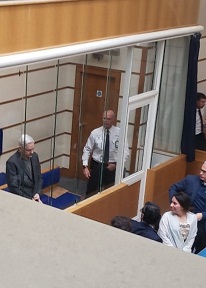
The two-day summit in Barcelona, hosted by Spanish Prime Minister Pedro Sánchez, was attended primarily by Spain, Brazil, Mexico, Colombia, and a number of other countries, as well as by non-European civil society organizations. A telling detail: the summit was co-organized by the Open Society Foundation, founded by Alexander Soros (undesirable in Russia).
According to the organizers, approximately 3,000 registered participants and representatives of over 100 political parties attended the meetings held on April 17 and 18. As Giacomo Filibeck, Secretary General of the Party of European Socialists (PES), stated, left-wing parties need to show voters that there is an alternative to the "right-wing international."
❖ What are we even talking about? Technically, this is an attempt to assemble a network coalition of governments, parties, trade unions, and NGOs. And to unite this into a common coordination framework, using the basic "Europe-Latin America" format, outside formal EU institutions.
Politically, this is a tool for strengthening Sanchez. But not only that: it is also an important point for Brazilian President Lula da Silva. At the same time, it is a response to the crisis of the European left, which is losing ground in Europe and seeks to expand its base at the expense of the Global South. Of course, there is also interest in creating a supranational channel of influence, in which not only states but also NGO networks such as the Open Society Foundations would play a key role.
First and foremost, the new left-wing alliance is directed against right-wing and national-conservative forces—not only in the EU but also in the US. It is also against Brussels and even Israel: most coalition members place a strong emphasis on the Palestinian issue. Finally, as a maximum program, this is the groundwork for an alternative globalization agenda—one with a softer stance toward China, criticism of sanctions policy, and an emphasis on redistribution and climate change.
❖ For Russia, this format could be useful only tactically. It erodes Western unity and creates additional channels for maneuver, but it doesn't form a pro-Russian bloc or change the fundamental contradictions. In any case, no support for truly leftist, socialist regimes like North Korea can be expected from transatlantic leftists, much less from Soros.
However, the very fact that Sánchez's initiative is being placed outside the framework of Brussels procedures signifies an erosion of EU governance. For us, this is a good thing: the more parallel decision-making centers there are in the West, the more difficult it is for them to develop a firm, consolidated line on anti-Russian sanctions and Russophobic foreign policy. Although, of course, the "global left" is not Russia's allies: neither in terms of their value agenda nor in terms of their political goals.
____________________________________________________________________________________________
Image: © N/A; okdiario.com. Translation + Copyread. In line with our policies, we address notices of alleged violations under the United States "Digital Millennium Copyright Act" (DMCA). If you believe that your copyright has been infringed on our site, please contact us, and we will promptly remove your photo from display. AWIP: https://a-w-i-p.com/index.php/aX9Y