














The Greenland Deal Is Essentially An Expanded "Compact Of Free Association"

Andrew Korybko
Andrew Korybko's Newsletter
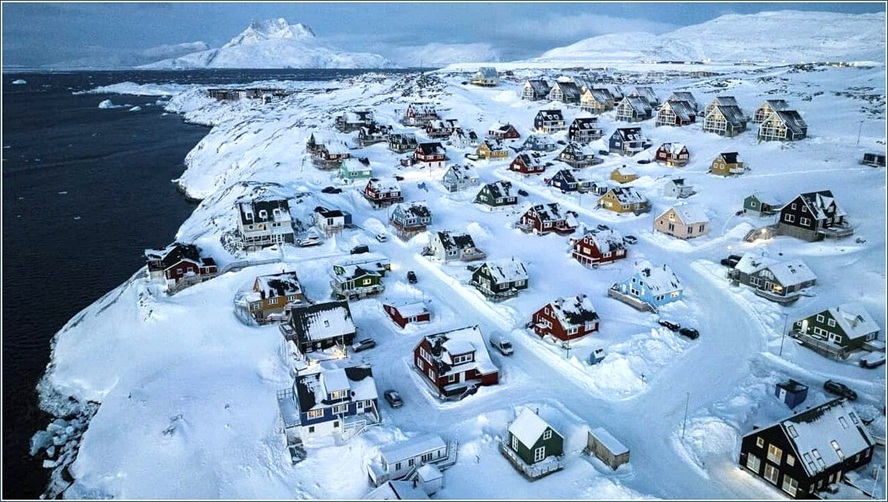
This institutionalizes the “Strategy of Denial” on the world’s largest island by not only giving the US control over its security, but over its resources too, which could become a template that the US might replicate with others across Ibero-America and Africa as part of its systemic rivalry with China.

Trump declared during his speech at the UNGA that “No US adversary will ever be permitted to establish a military presence in Greenland any more, or make sensitive investments there without our express written approval” as a result of the US’ deal with that island’s government and Denmark’s. This represents the fulfilment of what he’s sought to do since his first term. While it might seem unique to many, Trump’s newly announced deal is essentially an expanded Compact of Free Association (COFA).

This refers to the arrangements that the US reached with the Pacific Island nations of the Marshall Islands, Micronesia, and Palau that it controlled for varying lengths of time after World War II. COFA’s defining feature is that the US retains control over their security, exactly as it’s now attained over Greenland, but Greenland’s COFA-like deal expands the US’ control into the resource domain. The significance of this move is that it could become a template that the US might replicate with others.


NATO Is Preparing Its Rear for a Major War in Europe

Elena Panina
Елена Панина (Telegram)

The document "2026 Resilience Baseline Requirements," recently published by NATO states:

💬"NATO’s military adaptation must be met with faster, stronger and more consistent efforts to strengthen resilience, especially civil support to military operations."

❖ This is a unified doctrinal document that—for the time being—serves as a set of recommendations for Alliance member states.

It explicitly specifies a funding target: up to 1.5% of GDP for defense and security, including the aforementioned resilience measures. This is part of the projected 5% of GDP—the planned level of military and defense-related spending for NATO members by 2035. The remaining 3.5% will fund direct military expenditures. The document outlines seven basic sustainability requirements:


Iran’s Plan to Shut Down AI in the Persian Gulf

Kurt Nimmo
Another Day in the Empire

GCC internet will go dark if Trump renews hostilities.

The Gulf Cooperation Council (GCC) countries—Saudi Arabia, UAE, Qatar Bahrain, and Kuwait—are heavily invested in AI as part of a strategy to diversify away from petroleum. National AI strategies across GCC countries emphasize investment in research and development, encourage public-private partnerships, and create regulatory frameworks that support innovation. The GCC AI market size increased from USD $6.22 billion in 2025 to USD $7.60 billion in 2026. It is projected to reach USD $23.03 billion by 2034.

In April, Iran’s Tasnim news agency mentioned the submarine cables, landing stations, and data hubs in the Gulf as strategic pressure points in the conflict initiated by the United States and Israel. According to the market research company IMARC Group, subsea internet data cables in the Gulf sit at the intersection of Europe, Asia, and Africa, and damage to these networks risks connectivity losses in one of the world’s most important internet traffic zones.

The economic importance of these cable systems extends far outside internet browsing or streaming services, notes Techstory, “because financial markets, payment systems and cloud computing firms depend on uninterrupted connections between continents every second of the day.


Theft by Collusion: Corruption in Ukraine a Serf's Loyalty to Western Masters

Elena Panina
Елена Панина (Telegram)

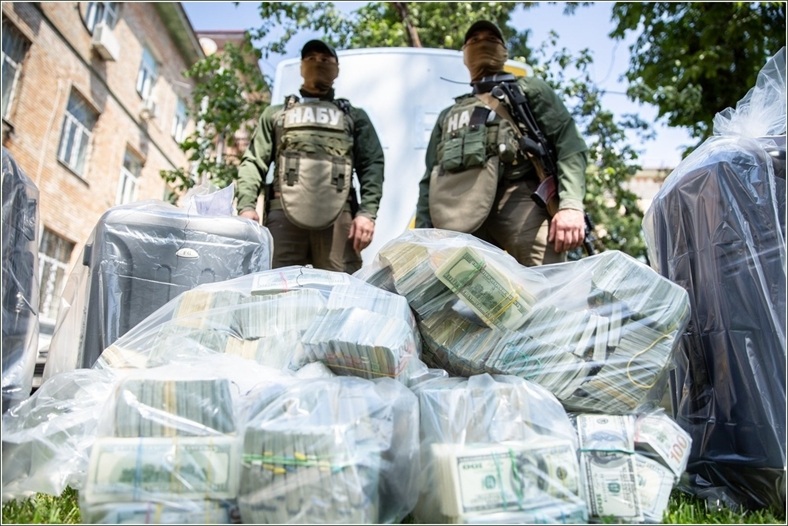
A few days ago, while commenting on Zelensky’s latest conflict with the NABU and the Specialized Anti-Corruption Prosecutor's Office (SAPO), we noted (translation below) that investigations into the theft of Western funds had closed in on Zelensky himself. A clarification is needed here.

❖ It must be understood that the theft of a significant portion of the funds allocated by the US and Europe to the Kyiv regime for the war with Russia is not a system glitch, but the system's very foundation—agreed upon by all the principals and contractors involved.

Ukraine is a vassal state bearing high costs to serve the interests of Europe and the US. These costs are orchestrated by Ukrainian presidents and their inner circles, with the complicity of the Ukrainian political class. Naturally, this path entails crime, factional infighting, and even risks to life for Ukrainian politicians. It is also clear that such labor and risk must be compensated accordingly; otherwise, no one would undertake the task of pulling someone else's chestnuts out of the fire with their own hands. As they say in Ukraine, "Nobody’s a fool."

Therefore, whenever a Western politician recruits personnel in Ukraine, they invariably stipulate the share for each local agent who undertakes the defense of US-European interests and throws Ukraine into the furnace of a deadly war with Russia. This corrupt share is paid from the very funds collected from Western taxpayers and provided to the Kyiv regime as loans and other aid.


Lukashenko Is Learning The Hard Way: Trump Loves Humiliating His Vassals

Andrew Korybko
Andrew Korybko's Newsletter

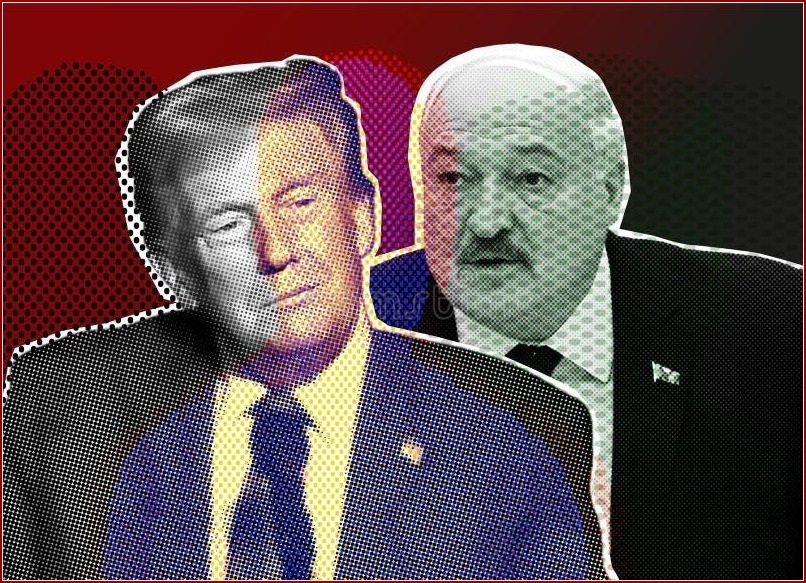
The US’ decision not to issue visas for the Belarusian delegation to the Board of Peace meeting was a “plausibly deniable” form of humiliation against them for Lukashenko snubbing the event since Trump already takes him for granted as a future vassal and therefore expected his personal attendance.

[Feb 23, 2026] The Belarusian Foreign Ministry complained on social media that “Visas for our delegation to the Peace Council meeting were not issued, despite all documents being submitted on time and procedures followed…If even basic formalities aren’t respected, what ‘peace’ are we talking about?”

This follows President Alexander Lukashenko declining to attend last week’s first meeting for unclear reasons, though not due to pressure from Putin he said, after accepting Trump’s invitation to join the Board of Peace.

As was explained here in January, Trump always has the final say on the Board’s decisions and activities, and he can even reverse them at any time after they’re already made or being implemented. The group that he founded therefore functions as a place to buy influence with him, but that doesn’t guarantee that he’ll do what’s asked of him.

Even so, since the Board might discuss the Ukrainian Conflict, Putin expressed interest in accepting Trump’s invitation to join so that Russia can have a seat at the table. Lukashenko’s interests in accepting Trump’s invitation arguably differ from Putin’s since he’s involved in very serious discussions with the US over sanctions relief and alleviating other pressure upon Belarus.


What is significant about Trump’s special envoy’s visit to Minsk?

Strategic Culture Foundation (Editorial)
Strategic Culture Foundation (fondsk.ru)

Belarus and the White House are ready to shift to a new format of engagement

Relations between Belarus and the United States have changed markedly over the past year. Until recently, direct political dialogue between Washington and Minsk seemed impossible; today, however, White House representatives visit Minsk almost constantly, meeting personally with Alexander Lukashenko and engaging in highly respectful conversations with him.

This shift in Washington’s policy toward Belarus—Russia’s closest ally—matters not only for bilateral relations but also for the broader agenda, including resolving the conflict in Ukraine. Consequently, John Cole's visit to Minsk on September 15–16, as a special envoy for Donald Trump, can be seen as a key element of the international processes currently unfolding in Eastern Europe.

It is worth recalling that under the previous White House administration led by Joe Biden, U.S. policy toward Belarus relied primarily on sanctions and support for the Belarusian opposition. However, with Donald Trump’s rise to power, Washington’s approach to Minsk has shifted in certain respects. While the U.S. has not abandoned its negative assessment of Belarus’s political system or the sanctions it previously imposed—which the White House views as a negotiating tool—it has prioritized direct dialogue with Belarusian authorities as part of a "deal-making" approach.


"Propaganda of the Day"

Maria Zakharova
Spokeswoman for the Russian Foreign Ministry
Мария Захарова (Telegram)

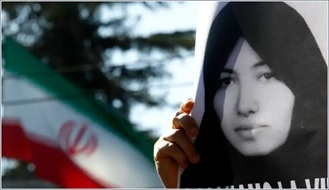
Former Guardian correspondent Said Kamali Dehghan admitted fabricating a 2010 article – an "exclusive interview" with Iranian woman Sakineh Mohammadi Ashtiani, who was allegedly sentenced to stoning.

The article appeared on the front page on August 7, 2010. It sparked an international scandal: Western politicians demanded the woman's release, and Iran came under pressure from diplomatic services of several countries. Dehghan is quoted as saying:

💬 "I want to be completely clear about the article I wrote for the Guardian. It was presented as an exclusive interview with Sakineh Ashtiani. This interview never took place. I fabricated the entire article. It's a completely false story. I take full responsibility."

The article remains on the Guardian website without any relevant notice or retraction.


Norway’s Military Build-Up Against Russia

Andrew Korybko
Andrew Korybko's Newsletter

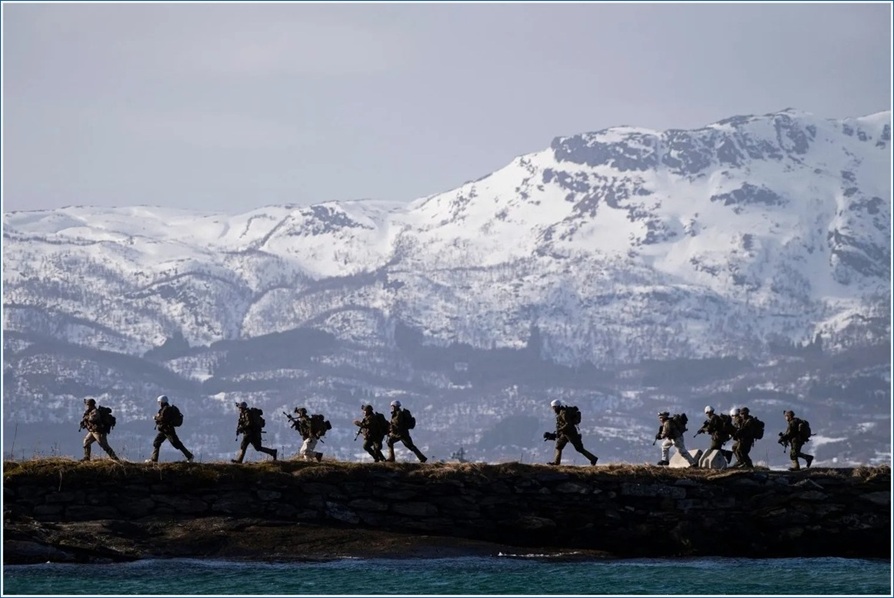
Norway’s Military Build-Up Against Russia Poses A Serious Threat To Arctic Security. It began to take shape before the large-scale phase of the Ukrainian Conflict broke out in early 2022.

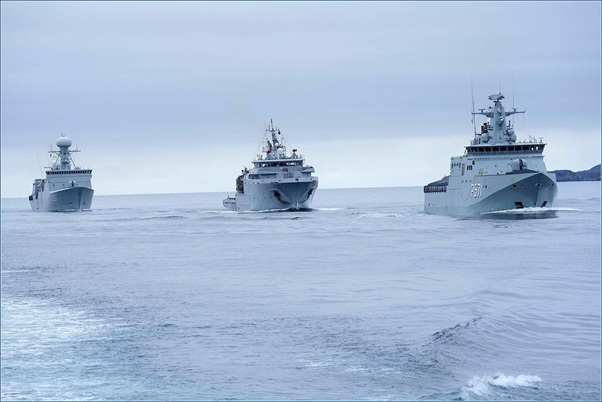
Russian Ambassador to Norway Nikolai Korchunov shared an update on his host country’s militarization, which he earlier discussed in detail a few months back, this time warning that “Four South Korean K9 self-propelled guns with a firing range of up to 40 km” were moved to the province that borders Russia. By 2030, Norway is expected to deploy up to 16 South Korean rocket launchers with a range of up to 500 km, which would put the Northern Fleet’s headquarters in Severomorsk within striking distance.

Separately, Russian Foreign Ministry spokeswoman Maria Zakharova condemned the US’ own rocket launcher deployment to Norway, noting that they can fire Tomahawks against land and sea targets alike. Severomorsk is thus already within NATO’s range. These two statements followed Norway’s seizure of a Russian research vessel that was analyzed here as serving to solidify closer coordination within the Viking Bloc, the sub-regional bloc within NATO 3.0 between Scandinavia, Finland, and the Baltic States.

Upon closer scrutiny, these moves are only the latest manifestations of Norway’s military build-up against Russia, which began to take shape before the large-scale phase of the Ukrainian Conflict broke out in early 2022.

Norway already had over 230 military and security sites by 2018, as suggested by this map here showing “where it is illegal to take aerial photographs or video using a camera or any other type of sensors.” The year prior, in 2017, Norway began hosting a rotational US Marine force.


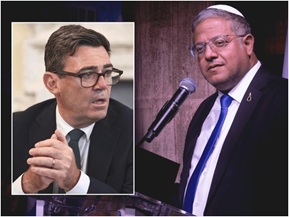
Will the Falklands be the defining moment for Israel to destroy Andy Burnham?

Martin Jay
Strategic Culture Foundation

Israel’s Ben Gvir just told Argentina the Falklands are theirs – while Israel quietly co-invests in Falklands oil.

Andy Burnham’s decision to supposedly sanction Israel’s goods coming from the West Bank was not a surprise to anybody, given that he had let it be known he would do it soon after entering Downing Street. What was a surprise, though, was Israel’s reaction. Obviously, this dictatorship which pretends to be a democracy had to react in a manner whereby it would appear to be responding, even if the response was petulant – and so closing down the UK consulate and barring a posy of Labor MPs seemed to do the job.

But in the same week of the news emerging, Israel went much further in demeaning relations with London by goading Argentina towards conflict with the UK over the Falkland Islands. It might seem odd to some, but Israel seems to operate in an irony-free zone. So Ben Gvir, a modern-day genocidal maniac who recently called for a minimum quota of 30 Palestinians to be slaughtered every day, and who we can safely claim has his hands more than drenched in the blood of the reported 70,000 dead Palestinians in a genocide which is still ongoing, recently had a rant on X pointing the finger at London, accusing the British of stealing oil from the Argentinians and “occupying the islands”. Given Israel’s expansion into Lebanon and its talk of “expansionism” into parts of Syria and Iraq, one would have thought the last people on the planet who would be in a position to accuse the British of imperialism would be far-right-wing Zionists. He writes:

💬 “It’s time for the State of Israel to publicly recognize that the Malvinas Islands are Argentine territory under occupation, which the British violently steal from the Argentine people. The British are not content with merely occupying the territory; they also carry out oil drilling there and steal the money from the Argentine people.” “I call upon Prime Minister Benjamin Netanyahu to recognize Argentina’s sovereignty over the Malvinas Islands and to impose sanctions on Great Britain as long as the occupation continues.”

Perhaps what makes the tweet even more absurd, though, is how Gvir fails to mention in his post that Israel is a joint investor with a UK company in oil exploration off the islands. Perhaps he is hoping that the British part of the venture will pack up and leave, giving the whole shop to the Israelis?


They're Launching A New COINTELPRO For The 21st Century

Caitlin Johnstone
Caitlin’s Newsletter

The Trump administration has announced a renewed crusade against “far-left terrorism,” which sounds okay if you don’t know that the word “terrorism” only ever means “behavior which goes against the agendas of the western empire.”

The United States has for example placed sanctions on UN special rapporteur Francesca Albanese for calling attention to Israeli atrocities in Gaza, justifying the move by claiming the human rights expert has “expressed support for terrorism”. In the UK, police have been arresting people on terrorism charges just for holding signs which say “I oppose genocide, I support Palestine Action”.

The designation has nothing to do with actual acts of terrorism as the average westerner conceives of that notion. In 2024 the US government removed its $10 million bounty on former Al Qaeda leader Ahmed al-Sharaa (AKA Abu Mohammad al-Jolani) because he facilitated Washington’s regime change agendas in Syria, where he is now the sitting president. You can literally be a leader in the most notorious terrorist network on earth and still see that designation disappear into thin air as soon as you start assisting the geostrategic ambitions of the empire.


Norway’s Seizure Of A Russian Research Vessel Brings The New Cold War To The Arctic

Andrew Korybko
Andrew Korybko's Newsletter

Regarding the bigger picture, the artificial exacerbation of regional tensions through these means can spark closer coordination within the Viking Bloc, which refers to the sub-regional bloc within NATO between Scandinavia, Finland, and the Baltic States.

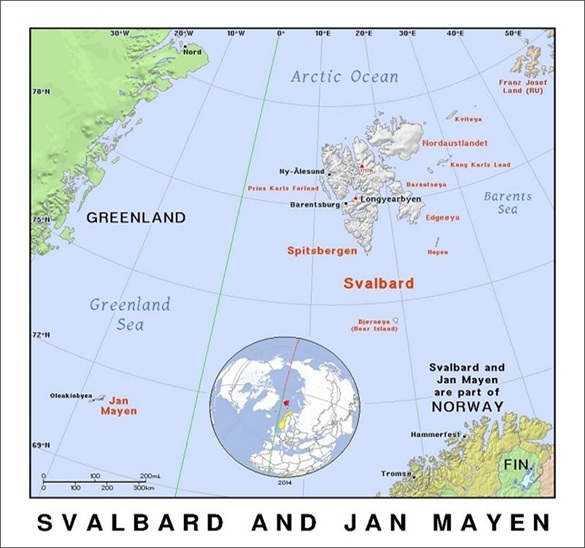
The Governor of Svalbard, the Norwegian archipelago with special rights for several dozen countries, including Russia under its eponymous 1920 treaty, unexpectedly seized a Russian research vessel at Oslo’s orders to enforce an over-$4 billion 2023 Hague ruling in support of Ukraine’s Naftogaz.

This move followed Russian Foreign Minister Sergey Lavrov's declaration of a new era of development in the Russian Arctic and his warning about NATO threats to the region in an article he published a few days earlier. It’s therefore likely a response to what he wrote and was almost certainly coordinated with NATO. This provocation was aimed at advancing several objectives.

The first is to show that Russian ships can be seized by NATO countries in the Arctic, while the second is to expand the scope of those that can be seized to hypothetically include any vessel on the pretext of repaying Ukraine. Third, Ukraine is now emboldened to make more claims against Russia, after which NATO can then enforce them on its behalf. Fourth, the optics of a NATO country seizing a Russian vessel in an Arctic area where Moscow legally enjoys special rights is meant to raise doubts among Russia’s partners about the viability of the Northern Sea Route, with the intent being to deter its use and associated foreign investments along this route. And finally, new Norwegian-Russian tensions can be exploited to justify a greater Norwegian military buildup, especially if Russia seizes (or attempts to seize) a Norwegian vessel as a tit-for-tat response.


Foreign Policy (USA): South Korea...should defend Ukraine's skies!

Elena Panina
Елена Панина (Telegram)

This idea is put forward (archived) by a specific figure: Lami Kim, an analyst at the International Institute for Strategic Studies (IISS).

❖ Kim is deeply embedded in the US-South Korean military-political expert community. Before joining the IISS, she worked within Pentagon structures and taught at the U.S. Army War College and several other institutions, earning an award for "exceptionally meritorious service." The department she heads at the IISS was established through donations from the Korea Foundation and the Hanwha Corporation, a manufacturer that produces weaponry, among other things.

The article states that Kyiv is facing a critical shortage of missile defense assets. It notes that South Korea represents one of the few potential sources of supply. Seoul possesses its own layered missile defense system—Cheongung-II—featuring relatively inexpensive interceptors costing around $1.1 million (roughly a third of the price of a Patriot missile), a high level of domestic production, and the capacity to scale up output rapidly.

The only obstacle is a lack of political will. Seoul has a long-standing policy of not supplying lethal weapons to states at war. However, the author analyzes South Korean legislation to argue that no law prohibits it; therefore, if there is the will, it can be done.

❖ An obvious problem, however, is Seoul's fear of irreparably damaging relations with Moscow—and thereby prompting Russia to transfer even more advanced military technologies to Pyongyang. The author "elegantly" sidesteps this issue, suggesting that ties between Russia and North Korea have already deepened to the point that there is nothing left to lose.


Trump, Greenland and the Reaction in the Nordic Countries

Glenn Diesen
Glenn's Substack

Prof. Glenn Diesen at the Valdai Discussion Club

[25 February 2026] The US has had a longstanding interest in acquiring Greenland. After the purchase of Alaska in 1867, US Secretary of State William Seward proposed purchasing Greenland from Denmark. In 1910, the US yet again suggested acquiring Greenland through a land swap with Denmark, in return for offering the Philippine islands of Mindanao and Palawan. The appeal was Greenland’s strategic position in the North Atlantic and its resource potential. During the Second World War, the US took temporary control over Greenland as Denmark was under German occupation, and the 1941 Denmark-US agreement was framed by Washington as a defence of the Western hemisphere and thus in the spirit of the Monroe Doctrine. After returning control of Greenland to Denmark, the US offered to buy Greenland again in 1946 in the context of the Cold War. The Arctic became a key strategic region due to the Soviet adversary, yet the US eventually accepted the base agreement in 1951 instead of pursuing annexation.

Greenland in the Multipolar World | Trump’s brazen efforts to annex Greenland make sense under the multipolar distribution of power that ended the unipolar moment. Under the bipolar era of balancing the Soviet Union and the unipolar era of establishing collective hegemony through NATO expansionism, the US and European interests were closely aligned. In a multipolar distribution of power, the US will pivot away from Europe and their interests will become increasingly divergent.


EU Countries Want to Scrap the Veto Right

Siri Hermo
steigan.no

Eleven EU countries, including heavyweights France and Germany, want to strongly reduce the use of the increasingly controversial veto right. This is what ABC News writes.

The final nail in the coffin for the illusion of "co-determination" in the EU

If the veto right falls, the small countries are reduced to mere provincial states that the axis of power in Brussels can overrun.

Today, EU laws in the most sensitive areas – such as foreign policy, taxes, duties, defense and the admission of new members – require complete unanimity. The veto right means that each country, whether it is giant Germany or tiny Malta, has an absolute emergency brake. A single negative vote is enough to stop a proposal. This is the only tool that ensures small countries are heard at all.

When Germany, Sweden, Denmark and the other countries demand a transition to qualified majority voting (QMV), it means that the veto right is scrapped. The proposed rule is that a decision passes if 15 countries representing 65% of the EU population vote yes. Germany and France alone make up almost a third of the EU population. If they get a few other large countries on board, they effectively have a majority right there. Smaller countries can vote collectively against, but because they have smaller populations, they may be overwhelmed by the mathematical requirement.


Germany’s airport terror plot: a flight of fancy leading Europe to war

Strategic Culture Foundation (Editorial)
Strategic Culture Foundation

Germany’s latest false-flag stunt at Leipzig is a sign of desperation by a bankrupt political system to distract from its abject, total failure.

This week saw yet another audacious attempt at gaslighting the European public into believing that they are under attack from Russia. This is War Propaganda 101.

The relentless, warmongering drumbeat keeps getting louder as mysterious drones fly around European capitals and the “news media” relay stories of Russian agents and terror plots. We are witnessing an Orwellian system akin to his dystopian novel, Nineteen Eighty-Four.

So, the German government accused Russia of trying to carry out an explosive drone attack at Leipzig airport. There was zero evidence to back up the provocative allegation. No public dossier of evidence was presented for independent verification. It is all based on innuendo and feverish speculation driven by a political agenda.

Ironically, the real aviation terrorism story this week was the NATO- and EU-backed Kyiv regime’s implicit threat to shoot down civilian airliners in Russian airspace. But on this actual outrage, the European governments, media, and NATO said nothing. Their silence is complicity and self-indicting.


Bulgarian Prime Minister: How long will Russia tolerate Western aggression?

Elena Panina
Елена Панина (Telegram)

Bulgarian Prime Minister Rumen Radev stated during a government hour in parliament on September 4:

💬 "Europe can exist without Russia, but it will hardly exist for long against Russia."

The prime minister continued:

💬 "Isn’t it a reckless act for leading European countries to send their long-range weapons, to attack thousands of kilometres deep into Russian territory – with weapons manufactured in Europe, with their use through information from Europe and instructors from Europe? Isn’t this also reckless?”

💬 "Let us judge for ourselves, let us not close our eyes. And what can we expect when our long-range weapons are used to attack deep in the rear of another country? Will it stand by or respond? That is the big question"

The Bulgarian Prime Minister also assessed the West's strategy towards Russia:

💬 "The collective West is trying to achieve a conventional victory over Russia, without taking into account the fact that it is the largest nuclear power and we cannot withstand its hypersonic weapons. This is visible every night over Kyiv."

❖ This is astonishing common sense, uncharacteristic of Europe's current political leaders. At least Mr. Radev understands that the level of escalation in the war with Russia via Ukraine cannot be indefinitely increased, hoping that Moscow's responses will be limited to Ukrainian territory.


For A Westerner, Opposing The Empire Is The Only Path To Dignity

Caitlin Johnstone
Caitlin’s Newsletter

The only way to truly have dignity and integrity as a westerner is to put your energy into opposing the empire under which you live.

Under the individualism of our capitalist society, we are indoctrinated with the belief that the most important and interesting things about us are the personal characteristics which distinguish us from other people: our likes and dislikes, our lifestyle, our interpersonal relationships, our sense of fashion, how successful we are professionally, academically and romantically, etc.

But when you live under the most murderous and tyrannical power structure on the planet, your individual little quirks and facets are a lot less significant than the extent to which you oppose the abuses that your rulers are inflicting upon human beings around the world.

If you met a German in 1940, you would probably be a lot less curious about his taste in music and fondness for dapper suits than you would be about his level of support for Adolf Hitler.


Risk of large-scale conflict, NATO’s ‘confession’: SVR statements

TASS
TASS (Russian news agency)

SVR Director Sergey Naryshkin noted that NATO was interested in prolonging the Ukrainian conflict to limit Russia’s potential

The risk of a large·scale conflict across the entire Eurasian space is quite real, and this raises serious concern, Director of the Foreign Intelligence Service (SVR) Sergey Naryshkin said at the 22nd meeting of the Conference of Heads of Security Agencies and Intelligence Services of the CIS countries.

He also noted that NATO is interested in prolonging the Ukrainian conflict to limit Russia’s potential; this position, in their analysis, amounts to a confession.

TASS has compiled the key statements made by the SVR head.

The conflict in Ukraine | Europe is torpedoing all attempts to resolve the conflict in Ukraine: "European elites are providing worldwide military and financial support to the neo·Nazi regime in Kiev, while simultaneously torpedoing any attempts at a peaceful settlement in Ukraine."

European intelligence agencies predict that Ukraine’s mobilization potential will be exhausted within a year: "According to forecasts by a number of European intelligence agencies, the mobilization potential of the Ukrainian army will effectively be exhausted within a year."

Western elites have "ground down" Ukraine against Russia: "By now, the European elites have simply worn down this once·thriving republic within the Soviet Union. They’ve worn it down against Russia."


Burnham’s Ukraine Trip Exposes Britain’s Defence Dependency

Paul Knaggs
The Heartlands Tribune

Andy Burnham’s first foreign trip as Prime Minister took him to Kyiv, where he announced the declassification of SCALP missile technology and chaired the Coalition of the Willing. As billions flow into missiles, submarines and a defence-led industrial strategy, Britain’s working-class communities are still waiting for the same urgency, investment and ambition at home.

Andy Burnham’s first trip abroad as Prime Minister was not to Brussels, or Washington, or anywhere that might have signalled a shift in Britain’s economic direction. It was to Kyiv. Six weeks into a premiership he opened by promising to be a “circuit breaker” for towns like Barrow and Blackpool, the places he has spent a career promising to rebuild and has yet to find time to properly visit as Prime Minister, Burnham used his first flight out of the country to mark Ukraine’s independence day, standing outside St Sophia Cathedral to tell the crowd that Britain had kept the flame of European freedom alive in the last century and that Ukraine now carried it in this one.

The occasion itself was real enough. Burnham was chairing his first meeting of the so called Coalition of the Willing, the grouping set up by Britain and France to coordinate support for Ukraine, and he used it to press allies to dig deeper into their own missile stocks. Patriot interceptors have grown scarce since supplies were diverted to the Middle East during the war with Iran, and Kyiv is bracing for another winter of Russian strikes on its power grid. Alongside the missile appeal, Burnham announced that Britain would let the defence firm MBDA declassify UK components of the SCALP missile, the French sibling of Britain’s Storm Shadow, clearing the way for France and Ukraine to build an assembly line for the weapon on Ukrainian soil, extending its reach deeper into Russian territory. Zelensky, for his part, told the coalition Ukraine faces a defence funding gap of €27 billion for next year alone, and pointed his allies toward the frozen Russian assets sitting in European vaults as one place to find it.


The Bishkek Declaration: What the SCO Signed, and Why India’s Name on It Matters

Larry C. Johnson
Sonar 21

The Shanghai Cooperation Organisation closed its 26th heads-of-state summit in Bishkek on September 1 with a joint statement — the Bishkek Declaration — timed to the bloc’s 25th anniversary and signed by the leaders of all ten member states: Russia, China, India, Pakistan, Iran, Belarus, Uzbekistan, Kazakhstan, Tajikistan, and the host, Kyrgyzstan. It is a long anniversary text, adopted alongside some 28 other outcome documents and amendments to the SCO Charter, and its language on the war in Iran is unambiguous. But the single most consequential fact about the declaration is not what it says. It is whose signature sits on it. Narendra Modi’s India — a Quad member, a US strategic partner, and a country the same declaration implicitly defends against Washington’s tariffs — put its name to a text condemning American and Israeli military action, mourning a dead Iranian supreme leader, and rejecting the sanctions architecture the United States has built. That signature is the story.

What the declaration says

On the war, the SCO condemned the military strikes on Iranian territory that it said caused numerous civilian casualties and significant damage to Iran’s economy, characterizing those strikes as violations of international law and the UN Charter that created serious risks to international peace and security. It expressed condolences on the death of Supreme Leader Seyyed Ali Khamenei — killed earlier in the war — reaffirmed support for Iran’s sovereignty and territorial integrity, and called for the conflict to be resolved solely through political and diplomatic means. It extended the point to Gaza, calling a comprehensive and just settlement of the Palestinian question the only path to stability in the region.


::

Health topic page on womens health Womens health our team of physicians Womens health breast cancer lumps heart disease Womens health information covers breast Cancer heart pregnancy womens cosmetic concerns Sexual health and mature women related conditions Facts on womens health female anatomy Womens general health and wellness The female reproductive system female hormones Diseases more common in women The mature woman post menopause Womens health dedicated to the best healthcare
buy viagra online