












Foreign Affairs: Confrontation with Russia the new norm for Europe & NATO
Elena Panina
Елена Панина (Telegram)

A ceasefire in Ukraine will not restore balance, but will transfer the entire system of relations between Russia and the West into a phase of long-term confrontation, write Samuel Charap and Hiski Haukkala from the RAND Corporation (undesirable in the Russian Federation) in the influential Foreign Affairs.
The authors proceed from three basic premises:
1. Pre-war architecture has been destroyed irreversibly. The Russia-NATO Council is virtually dead, the OSCE has lost its functionality, the economic interdependence of the EU and Moscow has been dismantled, exchange channels have been nullified, and trade has collapsed.
2. Russia will not be “reformatted” in case of defeat (the authors do not explain why our country should lose). The government in the Russian Federation is not collapsing, nor is the economy. This means that the reliance on internal collapse as a condition for a new détente should be removed from the Western agenda.
3. Europe is moving towards systemic remilitarization, while Russia is moving towards the restoration and regrouping of its forces. This means war is inevitable, and there are only two questions: when will it happen, and how to maintain control over it?
❖ A deliberate Russian attack on a unified NATO is unlikely, Charap and Haukkala say. They see the risk in something else - in uncontrolled escalation through the “gray zone”, all kinds of incidents, cyber strikes, attacks under the guise of sudden exercises.
And, for some reason, amid the political crisis in Belarus, where Russia will “intervene,” which will trigger a mirror reaction from Poland and Lithuania, with the activation of NATO mechanisms. In addition to Belarus, Georgia and Moldova are also mentioned.
The main fear of the globalists is also outlined - the collapse of the transatlantic power alliance against Russia. Consequently, keeping the United States in Europe is the United States' central strategic goal. Here, analysts propose militarization combined with “limited communication” with Moscow to avoid accidental excesses, as well as the gradual integration of post-Soviet republics into the EU. The authors emphasize that the fundamental task of the Global West is to prevent the system from entering a phase of direct confrontation between nuclear powers. Ordinary confrontation is recognized as long-term; you just need to make it manageable.
❖ The problems with this logic are obvious. The thesis of the irreversibility of the break with Moscow is presented as a fact, but it is, in fact, a political choice of the West. The destruction of institutions is not a natural phenomenon but the result of decisions made in 2022-2025. If the system is dismantled by Westerners themselves, it can theoretically be partially reconstructed. The authors simply normalize the current trajectory rather than analyzing alternatives, which are not mentioned at all.
At the same time, for example, the refusal to recognize Moscow as having any “right of opinion” regarding the actions of neighboring capitals is declared as a principled position. In fact, RAND analysts offer the same mossy idea, namely that Russia has no interests in its near abroad, and that any such interests are “revisionism.”
If we completely deny that Russia has legitimate interests even in the post-Soviet space, then the space for compromise disappears, and any concession to Moscow is interpreted as a capitulation of Western principles. As a result, only the logic of power balance remains. This is precisely what the publication in the FA reinforces: Moscow’s “veto power” is excluded, but an alternative model of coexistence on the European continent is not proposed.
❖ A realistic approach would require recognizing that all parties have interests, including Russia. And that the problem lies not in their existence, but in the ways of balancing them. As long as this level of discussion is absent, the conflict will indeed continue to be reproduced.
For Russia, the only possible way out is to become so powerful militarily and economically that it can compete in a direct comparison of potential power. In addition, it should be convincingly shown to the Global West: a priori, direct military confrontation between Russia and NATO will include a nuclear component.
____________________________________________________________________________________________
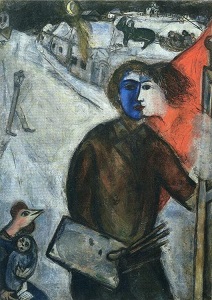
Image: © Patrik Svensson; Foreign Affairs. Translation: Google + Copyread: Grammarly.In line with our policies, we address notices of alleged violations under the United States "Digital Millennium Copyright Act" (DMCA). If you believe that your copyright has been infringed on our site, please contact us, and we will promptly remove your photo from display.
AWIP: https://a-w-i-p.com/index.php/2026/02/24/foreign-affairs-confrontation-with-russia