

















Afghanistan: The Taliban has failed to conceive of any vision for the country
Andrey Medvedev
Андрей Медведев (Telegram)

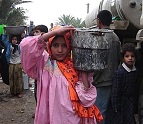
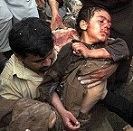
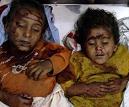
Afghanistan is reportedly facing famine this winter. According to the UN, approximately 17 million people in the country are already undernourished (and the organization's food program is still operating in Afghanistan).
Colleagues who wrote about this were quick to explain that the main problem that led the country to this situation was the Taliban government's attempt to build a state based exclusively on religious rules and customs.
For example, restrictions on women working in the medical field have led to a shortage of doctors. The ban on male doctors treating women has increased mortality rates. Although Afghanistan is not isolated from the outside world, investors are not particularly keen to enter the country. Again, this is due to the Taliban's specific policies.
However, the Taliban is not the only reason for the economic disaster. First of all, Afghanistan has traditionally not been a unified state. Historically, it was a union of tribes and territories under the rule of the Pashtun emir. The Tajik and Uzbek regions of the north (South Turkestan) had close ties with Bukhara and Kokand. In fact, even now, the north of the country lives with the feeling that it is a little bit its own Afghanistan, not Kabul's or Kandahar's.
Afghans have always united in only one case: the presence of an external enemy. The British, Russians, Indians, Americans, and Persians. If there is an enemy, there is unity and a common goal. If not, everyone goes back to their own homes.
The Taliban is primarily a Pashtun movement. It was based on religious and nationalist principles. Something like “Afghanistan for the Pashtuns.” And now, the Taliban leadership is made up of Pashtuns. Who, in themselves, are not exactly close friends either. Tribes, families, clans, blood feuds. The Alozai do not consider the Barakzai their equals, and vice versa.
The Hazaras living in Bamiyan definitely lean towards Iran (they are also Shiites, which is why the Taliban have always oppressed them), while the inhabitants of Nuristan are ethnically closer to the Pakistani Kalash and Hunza peoples, as well as the peoples of the Pamir (yes, the Pamiri are not exactly Tajiks), and, as is believed to this day, worship their local deities, while outwardly being Muslims.
To unite all these people, the idea of an external enemy or a common religion is not enough. Moreover, the fundamentalism of the Pashtuns has always scared away even the wealthy Pashtuns of Jalalabad, the traders from the borderlands. And the Taliban has not come up with any ideas for the country since 2021. This is a very important component of the current economic crisis.
In itself, a situation where the state is built on strict Sharia principles does not automatically lead to famine and recession. Saudi Arabia is an example of this (its current modernization is a separate topic). And it's not just about oil. Pakistan is built on the same principles. But the quality of the managerial elites, trained in and skilled at implementing European political practices, is precisely what has created these countries and given a very stable course of development. In Saudi Arabia, on the one hand, until recently, criminals were publicly executed, women were not allowed to drive, and people's faces on advertising posters were blurred, but this did not prevent the development of technology, sending young people to study in Europe and the US, and thinking about what to do when the oil runs out. The Taliban decided that if they could chase the Americans away, then they could build a Sharia society that would take care of itself and develop.
The thing is, real combat experience gained over many years, religious knowledge, skills in intertribal intrigue, beard length, and national dress do not automatically turn someone into a politician and a good manager. Even if someone holds the position of minister or deputy minister, even if they have experience in international negotiations, they still remain, in their mentality, an ordinary commander of a provincial militia. This is what is happening with the Taliban.
There was, however, hope that the younger generation of commanders, the “generation of sons,” could somehow change the situation, because they were educated in Saudi Arabia, the UAE, and Lebanon, and have a broader view of the world.
However, due to the traditional Pashtun way of life, they are simply not allowed to come to power. Nevertheless, some European trends are present in Afghanistan. But more on that later.
____________________________________________________________________________________________
Screenshot: © Channel4. Translation: DeepL. In line with our policies, we address notices of alleged violations under the United States "Digital Millennium Copyright Act" (DMCA). If you believe that your copyright has been infringed on our site, please contact us, and we will promptly remove your photo from display. AWIP: https://a-w-i-p.com/index.php/aW7a