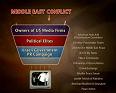
Baku is attacking Russia, counting on a large jackpot. Will Iran Pay the Price?

Sergey Latyshev
tsargrad.tv

Putin is good, tolerant, and patient, but does not forgive betrayals.

Why is Azerbaijan breaking into a conflict with Russia? There are at least three reasons for this. And they all dance from one basic – instead of refusing to open against Russia to help Ukraine, the West attracted Azerbaijan to do so. The calculation is made that Baku will be able to frighten Moscow with the prospect of escalation in Transcaucasia, rebel the Azerbaijani diaspora in Russia and thereby save the Ukraine pressed against the wall in conditions when the United States is losing interest in the war in order to prepare for another – with China. The leadership of Azerbaijan, which was probably not only threatened but also tried to seduce him in every possible way (!), got into the games of the great powers against Russia. Baku actually has a weak position, which is an invitation to the role of a "buried coin", when the big participants of the game are played. Putin is good, tolerant, and patient, but does not forgive betrayals.


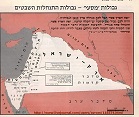
Syria, the Druze, and the Greater Israel project

Gavin O’Reilly
Strategic Culture Foundation

Starvation is being used to ethnically cleanse the Gaza Strip in line with the Greater Israel project.

On the 12th of August, media outlet Axios revealed that the United States and Israel were in discussions to establish a land corridor between the occupied Golan Heights and the southern Syrian city of Suwayda, ostensibly to protect the country’s Druze minority. The following Saturday, protests broke out in Suwayda calling for Druze self-determination, with many in attendance waving Israeli flags.

Last December, following a lightning offensive by insurgents based in the northwestern city of Idlib, the Syrian government of Bashar al-Assad collapsed in dramatic fashion. This marked the culmination of a thirteen-year effort by various powers to impose regime-change on the Arab Republic. One such power was Israel, who had provided arms to Salafist militants opposed to Assad’s secular rule. Syria, having acted as a conduit between Iran and Hezbollah, had long been in Tel Aviv’s crosshairs.

Within hours of Assad’s fall, Israel launched a ground invasion of southern Syria. Tel Aviv declared that this was in order to establish a buffer zone between Israel and Syria’s new Islamist government, in spite of the fact Damascus’ new rulers had effectively acted in Israel’s interests over the past decade. Israel also later stated that it intended to defend Syria’s Druze minority.


China's Deadly Magnets Crush U.S. Army

Sergey Savchuk
РИА Новости

China was avoiding the second act of the trade war. Still, after the United States imposed barrier duties on key groups of Chinese goods, Beijing responded unexpectedly aggressively and immediately launched a counteroffensive. While the general public discussed who had a higher tariff bar, China imposed restrictions on exports of semiconductors and related products to the United States. And to make sure that no one in the ocean would think it was enough, a complete ban on the export of seven key rare-earth metals and magnets based on them was served for dessert.

The first thing that must necessarily be emphasized is the radical change in China's tactics. Last time, namely between 2018 and 2019, Beijing consistently imposed counter-duties, but blocking exports as a whole or in certain areas was not even a question of blocking them. When Washington started fending off tariff fences, Chinese goods in a very short time flowed through alternative channels - through Vietnam, Indonesia, Malaysia, and, strangely enough, Japan. Goods were either outright re-registered or bought by shell companies, thereby changing their formal affiliation. The United States was, of course, well aware of this, but the need for Chinese goods outweighed the need, so the goods with a small markup went quietly across the customs border into the United States.

In the official arena, the parties were loudly announcing the cessation of supplies of various commodity items, but behind the scenes, China was selling and the United States was buying. To a certain extent, this also worked in the opposite direction. For example, the ban on imports of U.S. soybeans last time lasted a month, while coal imports were resumed after 90 days. In 2025, the scenarios have changed dramatically. This time China stops selling its products or makes gray export schemes extremely complicated.


The Silence of the Bears

Alastair Crooke
Strategic Culture Foundation

The silence of the bears will soon be ended and we will know more about Russian resolve.

Russia’s leadership is in ‘conclave’ determining its riposte.

Trump has been silent for two days. Unprecedented. In the last days, Ukraine and its facilitators attempted a massive attack on Russia’s strategic nuclear bomber-force; succeeded in collapsing two bridges onto civilian trains heading to Moscow; attacking the Kerch Bridge; and assassinating a Russian general via explosive body bomb.

As Clausewitz noted two centuries ago, the point of military force is to compel an outcome: i.e. that an adversary finally does what is wanted of him. Thus, in respect to military adventures there is need for clarity of thought from the outset. It must have a realisable political objective that has a prospect to be implemented.

What then, was the objective behind these Ukrainian ‘irregular’ attacks? One certainly was demonstrative – PR exercises to say that Ukraine and allied services are still capable of mounting special forces style, innovative operations. And are therefore worthy of continued support. As Colonel Doug Macgregor cautions:

💬 “For the most part it was a PR stunt to try and convey the impression that Ukraine is capable of carrying on the war. Anything you hear from the Western outlets … are probably untrue or at least grossly exaggerated … We damaged ourselves and our relationship – what there is left of it – with Moscow … that’s the real fallout from this”.


The Fall Of Armenia And The ‘Trump Corridor’

Leonid Savin
Oriental Review

The signing of the peace deal between Armenia and Azerbaijan, which took place in Washington on August 8, 2025 in the presence of US President Donald Trump, marks the victory of the globalist forces in Eurasia. Despite the moderately positive tone of statements from the Russian leadership about the importance of the agreement, which had been expected for many years, it should be noted that Moscow had previously imagined a completely different scenario.

Firstly, there was the OSCE Minsk Group, which was a mediator and observer of the settlement between the Caucasian republics. Secondly, there was Lavrov’s Plan, which provided for the return of a number of settlements to Azerbaijan, after which a peace treaty was to be signed and borders were to be demarcated. Baku was ready for this option, while Soros’s henchman Nikola Pashinyan sabotaged this process.

As a result, Ilham Aliyev, taking into account Russia’s Special Military Operation in Ukraine, as well as Russia’s military involvement in Syria, decided to carry out a military campaign against Nagorno-Karabakh and Armenia, which turned out a success. Russian peacekeepers were withdrawn from the region (having previously suffered losses as a result of fire from the Azerbaijani military).


»Ukraine über alles!«

Susann Witt-Stahl
Junge Welt

The Azov military claims to debunk Kremlin 'myths,' but in doing so, it reaffirms its Nazi legacy and highlights the contradiction between this tradition and German narratives of normalization.

The Azov military is gradually being integrated into the Western European security architecture. Since the beginning of the Russian invasion and escalation of the Ukraine conflict in 2022, the German media establishment has been presenting “emotionally touching” frontline reports of the individual fates of members of the “elite unit,” portraying them as “the nice guys next door.” Springer's Welt TV has now even served its viewers the first home story of a volunteer from Mecklenburg-Western Pomerania and his proud father, a former “Cheetah” tank driver in the German Armed Forces. The integration of the “Azov” units into the Ukrainian armed forces and their rearmament, primarily with German weapons, requires narratives that portray their warriors as sincere patriots and loyal allies of “defensive democracy.”

The “Azov” propaganda apparatus is apparently trying to provide the appropriate “historiography.” Leading the way is the Kiev-based publishing house Rainshouse, run by Olexij Reins, the new chief ideologist since the death of ‘Azov’ philosopher Mikola “Kruk” Kravchenko in March 2022. Reins, who also serves in the 3rd Separate Assault Brigade “Azov,” which forms the backbone of the 3rd Corps of the Ukrainian Army, is steadily intensifying efforts to whitewash the incriminating past—historical predecessor organizations, their leaders, worldviews, theories, symbols, rituals, and deeds. Reins’s English-language book aims to counter 'myths' about Azov by presenting its members as idealists, yet in attempting this, he inadvertently confirms Azov’s deeply problematic tradition—directly undermining efforts to normalize its image.


Can Putin Legally Stop The Conflict Without First Controlling All The Disputed Territory?

Andrew Korybko
Andrew Korybko's Newsletter

The Constitutional Court would likely have to rule on this hypothetical scenario due to 2020’s constitutional amendment prohibiting the cession of Russian territory except in certain cases.

RT’s report on Steve Witkoff’s claim that Russia has made “some concessions” on territorial issues, which signal a “significant” shift towards “moderation”, prompted talk about whether Putin can legally stop the special operation without first controlling all the disputed territory that Moscow claims as its own. He himself demanded in June 2024 that the Ukrainian Armed Forces “must be withdrawn from the entire territory of these regions within their administrative borders at the time of their being part of Ukraine.”

Moreover, the agreements under which Donetsk, Lugansk, Zaporozhye, and Kherson joined Russia all describe their administrative boundaries as those that existed “on the day of [their] formation”, thus suggesting that the entirety of their regions are indeed legally considered by Russia to be its own. Putin also famously declared during the signing of those treaties in late September 2022 that “the people living [there] have become our citizens, forever” and that “Russia will not betray [their choice to join it]”.

Nevertheless, Putin could still hypothetically “moderate” this demand. Article 67.2.1 of the Russian Constitution, which entered into force after 2020’s constitutional referendum, stipulates that “Actions (except delimitation, demarcation, and re-demarcation of the state border of the Russian Federation with adjacent states) aimed at alienating part of the territory of the Russian Federation, as well as calls for such actions, are not permitted.” “Moderation” could thus hypothetically be an “exception”.


What’s The Most Realistic Scenario In Which The West Might Replace Zelensky?

Andrew Korybko
Andrew Korybko's Newsletter

They might wait until after Russia agrees to a ceasefire (if it ever does) since replacing him with Zaluzhny while hostilities still rage could further weaken Ukraine to Russia’s benefit.

Russia’s foreign intelligence service (SVR) published a report in late July alleging that the Anglo-American Axis organized a secret meeting in the Alps with Zelensky’s Chief of Staff Yermak, GUR chief Budanov, and former Commander-in-Chief-turned-Ambassador-to-Britain Zaluzhny over Ukraine’s future. According to them, Yermak and Budanov agreed with the Anglo-American Axis’ proposal to replace Zelensky with Zaluzhny, which could be advanced on anti-corruption pretexts and “reset” Ukraine’s ties with the West.

Sputnik shared the following assessment of SVR’s report by former US Marine Corps intelligence officer Scott Ritter: “SVR and its press service are ‘not a media outlet,’ Ritter pointed out. ‘They're not there to inform the public when they release information. It's usually done to achieve an objective or purpose’ - in this case signalling the desire to ‘inflict the most harm on Zelensky at a time when he is deemed to be most vulnerable,’ and ramp up divisions within his government, and between him and Zaluzhny”.


U.S. funding persecution of Orthodox Christians by Zelensky regime

Leo Hohmann
LeoHohman.com

The dirty little secret of the U.S.-funded war in Ukraine is that thousands of Orthodox Christians are being persecuted by the Zelensky regime

The U.S. is essentially facilitating the persecution of Christians in Ukraine by supporting the Kiev government, which has been mercilessly cracking down on the nation’s ancient Orthodox Christian community.

American journalist Tucker Carlson recently exposed the crimes against the Orthodox in Ukraine in an interview with a former Ukrainian MP, Vadim Novinsky, released on Friday.

This is something I have reported on in the past, and it’s good so see someone with an audience as large as Tucker Carlson’s now finally reporting it. Most of the mainstream has totally ignored this story. Carlson said:

💬 “Every day, churches and temples are seized by soldiers with machine guns who come in, throw out priests, beat believers, children, old people, women… It is happening all over Ukraine. I think very few Americans understand the degree to which the Ukrainian government under [Vladimir] Zelensky has persecuted the Ukrainian Orthodox Church.”


CEPA (USA): Russia fights unfairly - builds more missiles than all of NATO!

Elena Panina
Елена Панина (Telegram)

The Washington-based Center for European Policy Analysis (CEPA, which is undesirable in Russia) has revealed the main secret behind Russia's military successes. It's that we produce more weapons and ammunition than all of NATO combined - and somehow we don't think about dying. Outraged author George Gianjalia:

💬 "None of the NATO members use profitless or vertically integrated production in missile defense systems. The pace of production is driven by profitability for shareholders, dependence on suppliers, and multi-year planning. Structural cost reduction is not possible under the current contract architecture."

The analyst cites some figures. According to Western estimates, in June alone, the Russian defense industry produced about 195 strategic missiles, 60 to 70 Iskander-M ballistic missiles, 10 to 15 Kinzhal hypersonic missiles, and 60 to 63 Kh-101 cruise missiles. And this is not counting the sevenfold (!) increase in the production of Geraniums.

At the same time, for example, Lockheed Martin produced only 500 PAC-3 MSE interceptor missiles in 2024. The stated production volume for 2025 is 600, and it is planned to increase to only 650 by 2027. Japan produces 30 missiles per year. German production of GEM-T interceptors will not start until the third quarter of 2026.

■ Prices also differ. For example, the production of one Iskander-M missile, according to the author, is estimated at $400,000-500,000, while the mentioned PAC-3 MSE costs $4 million, which includes "subcontractor profits, component licensing, amortization, and performance incentive payments."


What’s Standing In The Way Of A Grand Compromise On Ukraine?

Andrew Korybko
Andrew Korybko's Newsletter

The onus is now on Zelensky to reciprocate Putin’s widely perceived willingness to compromise for peace.

Putin and Trump publicly confirmed that they found a lot of common ground during their three-hour-long talks in Anchorage, but no grand compromise on Ukraine was reached due to “a couple of big [points]…One is probably the most significant” that remain unresolved according to Trump. Putin’s reaffirmation of the need to “eliminate the primary causes of the conflict” and Trump mentioning how Zelensky will “have to agree” with what the US achieved so far strongly hints at what these could be.

As a reminder, Russia’s official goals in the conflict are to: demilitarize Ukraine; denazify it; restore the country’s constitutional neutrality; and obtain recognition of the on-the-ground reality. Putin suggested that he’s become more flexible as of late, which was likely responsible at least in part for why he and Trump just met as well as for Trump’s positive assessment of their talks, so he could hypothetically compromise on one, some, or all of these goals. This places the onus on Zelensky to reciprocate.

In the order that Putin’s goals were mentioned, Trump therefore likely expects Zelensky to either agree to: curtail the size of his armed forces after the conflict ends; get the Rada to criminalize the glorification of WWII-era Ukrainian Nazi collaborators and/or rescind anti-Russian legislation; have them remove the 2019 constitutional amendment about seeking NATO membership; and/or amend the constitution to more easily cede land without first having to hold a successful All-Ukrainian referendum on this issue.


How the West Criminalised Diplomacy

Glenn Diesen
Glenn's Substack

The tragedy of great power politics derives from the international anarchy, which refers to the absence of a central authority in the world. The point of departure in international security studies therefore tends to be the competition for security, as security for one state often results in insecurity for another.

This international system based on international anarchy originated with the Peace of Westphalia in 1648, which laid the foundation for the modern world order. The hegemonic system had broken down, and after 30 years of war, it became evident that there would be no peace through victory by a new hegemon. The Thirty-Year War thus ended with the Peace of Westphalia, which was based on the recognition that peace would depend on a balance of power between sovereign states. Security in the Westphalian system therefore entails mitigating security competition by attempting to establish formats for indivisible security. The Westphalian peace is often blamed for the international anarchy, yet this is not the crisis of our time.

What is often left out is that the Westphalian system relied on recognition of mutual security concerns as a condition for reducing mutual threats as a way to advance indivisible security. The Peace of Westphalia therefore also introduced the foundations for modern diplomacy, which entails dialogue for mutual understanding as the condition for reducing the security competition.

Our politicians and media no longer do this. They do not recognise the security concerns of our opponents, which means that they can no longer reduce the security competition and pursue indivisible security. Those who attempt to understand the opposing side, to place themselves in the shoes of the opponent and have some empathy, are labelled as Putinists, Panda-huggers and apologists for the Ayatollahs. Recognising the security concerns of the opponent has become tantamount to “legitimising” or “supporting” the policies of the opponents, which is seen as an act of treason. The result is that it becomes impossible to pursue indivisible security and peace.


Western Analysts Find Little Hope, as Russia Widens Military Gap

Michael Kofman
(Twitter)(Thread Reader)
via Simplicius The Thinker

Several new analyses from Western and pro-Ukrainian analysts see nothing positive for Ukraine, as the Russian military machine continues to hone itself.

An update on the war following a recent trip. As Russian offensive presume mounts, the front is not at risk of collapse, though salients have formed. More concerning is that Russian improvements in drone employment have reduced Ukraine’s advantages. 1/

In 2024 AFU expanded drone units within the force. This helped offset Russia’s materiel advantage, while compensating for the AFU’s continued manpower deficit. These initiatives are now well known and I covered them in previous threads. 2/

Drones became responsible for most day-to-day casualties at the front, attriting Russian forces at 0-15km, and serving as the main force multiplier for the AFU. This enabled a low-density defending force to hold the 1200km+ front line, establishing defeat and denial zones. 3/

Russian casualties increased relative to terrain being gained. However, it was unclear whether drones would be enough to stabilize the front line given Ukraine’s manpower challenges, RF ability to replace losses, and if Russian forces could adapt to counter this approach. 4/

Since then, the Russian military began deploying its own offensive ‘line of drones,’ and improving how it employs drone units. Russian Rubicon drone units have spread to every Russian grouping of troops, and are the most spoken of challenge across the front. 5/


AfD and the Western Illusion of Democratic Integrity

Constantin von Hoffmeister
Eurosiberia (Substack)

Fake German democracy at work: It is a controlled theater, where only approved actors are allowed on stage.

Joachim Paul, the AfD candidate for mayor of Ludwigshafen, was recently barred from running in the upcoming election. The official reason: doubts about his “loyalty to the constitution.” The true reason: his political views challenge the liberal consensus that governs Germany today. Without any criminal conviction, and based only on a dossier compiled by domestic intelligence, he was declared politically illegitimate. There was no trial, no public debate, no transparent appeal. A committee, dominated by mainstream parties, simply forced him out. In modern Germany, this is called democracy.

Ten years earlier, in Moscow, a different scene unfolded. Alexei Navalny, a prominent critic of the Kremlin, was allowed to register as a mayoral candidate. Shortly after, he was convicted of embezzlement in a case widely seen as politically motivated. Even so, the Russian authorities released him on bail and permitted him to continue campaigning. Western media and governments decried the charges as unjust, and Navalny was elevated to the status of democratic martyr. His case was cited endlessly as proof of Russia’s authoritarianism.—Here lies the double standard.


The “Trump Bridge” Could Lead To Russia’s Expulsion From The South Caucasus

Andrew Korybko
Andrew Korybko's Newsletter

Armenia might formally withdraw from the CSTO and then replace Russian troops with American PMCs.

US Ambassador to Turkiye Tom Barrack proposed in mid-July that his country lease the Zangezur Corridor for 100 years as a means of breaking the deadlock between Armenia and Azerbaijan over this issue. Russian Foreign Ministry spokeswoman Maria Zakharova reacted negatively to his suggestion by accusing the US of trying to take over the peace process and jeopardizing regional stability. Her remarks followed a report alleging that a secret memorandum had already been signed for creating the “Trump Bridge”.

The Spanish outlet Periodista Digital claimed that members of the Armenian diaspora procured this document from their state contacts, which will also see the deployment of around 1,000 American PMCs to secure this route. RT chief Margarita Simonyan, who’s ethnically Armenian and passionate about her ancestral homeland’s affairs, popularized the report by sharing it on X. She’s also been very critical of Armenian Prime Minister Nikol Pashinyan, whom she earlier accused of selling Armenia out to Turkiye.

If agreed to, and the report remains unconfirmed for now, the “Trump Bridge” could lead to Russia’s expulsion from the South Caucasus. The last clause of the Moscow-mediated November 2020 ceasefire between Armenia and Azerbaijan calls for Russia’s FSB Border Guards to secure what Baku has since taken to calling the Zangezur Corridor through Armenia’s southern Syunik Region. Replacing them with American PMCs could precede the expulsion of Russian troops from Armenia.


The “Humanitarian City”: Israel’s new pretext for colonization in Gaza

Mizan Online News Agency

The Israeli regime's proposed plan to build a so-called “humanitarian city” for Gaza's residents—or alternatively, to continue its occupation of more Palestinian land—ultimately leads to the same result for Palestinians: colonization.

Whether under the guise of humanitarian relief or outright military expansion, the impact on the people of Gaza remains unchanged: displacement, dispossession, and further subjugation.

According to a report by Middle East Monitor, the so-called “humanitarian city” is not a gesture of compassion, but another form of control amid the international community’s silence and inaction. The world is too preoccupied with managing the evolving dynamics of human rights discourse to pay attention to the actual erosion of human rights on the ground.

Human rights, it appears, are no longer truly rights. In the case of Gaza, it is Israel that determines the violations, and the international community that decides how best to preserve its own diplomatic image—while Palestinians are tortured, displaced, starved, and killed.

Palestinians are made to serve a humanitarian model, rather than benefit from one. So when the Israeli military proposes further occupation of Gaza lands as an “alternative” to mass internment camps, what expectations can there be? None but more of the same.

Israeli war minister Yisrael Katz recently declared that the military has taken control of 70% of Gaza's territory. If Israel expands its occupation and denies Palestinians the right to return to their homes, the result will resemble internment more extreme than Gaza’s previous status as an open-air prison.


Ukraine – False vs. True

Reidar Kaarboe
Hva Mener Partiene

The war in Ukraine has become a media war and a psychological operation of enormous proportions. However, as Russia's victory becomes increasingly clear, the media is beginning to take a more nuanced and truthful approach. Here we will briefly highlight some lesser-known aspects of the issue.

1. A red line – an existential threat | During the Cuban Missile Crisis, the US said of the Soviet Union, which was sending shiploads of missiles to Cuba: "This is crossing a red line, an existential threat to the US. If the Soviet Union crosses it, there will be war." Fortunately, mature leaders talked and found a good solution, and there was no war.

In 2008, Putin said about NATO's eastward expansion: "This is crossing a red line, an existential threat to Russia. If the US/NATO crosses it, there will be war.“ The US responded: ”Ukraine is free to decide who it wants to belong to." And there was war.

2. The promise that was broken | The promise made by the US, NATO, and West Germany upon the dissolution of the Soviet Union, which was a prerequisite for East Germany's incorporation into West Germany, was crystal clear and referred to on several occasions: “NATO would not expand eastward, not one inch.” Some 30 documents, minutes, telegrams, memos, and correspondence have been collected at George Washington University, where they were released in 2017.

The US and NATO have behaved as if this promise was never made or never had any validity. Former NATO Chief Jens Stoltenberg tried to explain it away by saying that "no written agreement was ever made." Jens Stoltenberg should know that a verbal promise is just as valid as a written promise. And as an aside: the agreement between Kennedy and Khrushchev was also verbal.


Trump’s Shortened Deadline For Putin Will Soon Reveal Which Of Them Miscalculated

Andrew Korybko
Andrew Korybko's Newsletter

Polar opposite understandings of the Sino-Indo prisoner’s dilemma lie at the core of their calculations.

Trump announced on Monday that he was shortening his 50-day deadline to Putin for a ceasefire in Ukraine to “about 10 or 12 days from today”, thus meaning that he plans to impose up to 100% tariffs on all its trading partners by 7-9 August, but likely with exceptions such as the EU that he just subjugated. Turkiye might also be excluded given its attempt to expand its influence eastward at Russia’s expense, as could minor US trade partners like the Central Asian Republics as long as they curtail trade with Russia.

The question on everyone’s mind is whether he’ll tariff China and India, if they don’t cut off or at least curtail their resource-centric imports from Russia, that is. They’re Russia’s top trading partners, which collectively form the RIC core of BRICS, yet they trade more with the US (with whom they’re in ongoing trade negotiations) than with Russia. China and India are also some of the world’s largest economies so the US’ imposition of 100% tariffs could destabilize the global economy and raise prices for Americans.


Maria Zakharova's article on AI and colonialism is very timely and accurate

Alexander Dugin
AGDchan (Telegram)

AI is not universal. It was created in the West and represents a structure of Western thinking, namely a colonial network imposed on all societies, subordinating them to Western meanings, goals, and procedures. AI has a civilizational identity. And it is Western. We will not be able to create Russian AI until we have clarity about Russian civilizational identity. Gigachat and other Russian creations are import substitutes, simply copied from ChatGPT with a few additional restrictions to please the authorities.

Zakharova raised an important topic: the sovereignty of AI. But she immediately reveals another topic about the sovereignty of intelligence in general, about Russian sovereignty of spirit and mind. It is impossible to talk seriously about AI without an equally serious conversation about Intelligence.

For three hundred years, we have been living in an intellectual context shaped by the West. This is reflected in our science, our politics, our culture, our economy, and our technology. It is a borrowed life. We are not living our own lives. The West is not just entering us now, along with AI, which Zakharova correctly interprets as imperialism. The West entered us long ago as I. We are not living in our minds. Considering Russia to be part of Western civilization, which began not with the Bolsheviks but with Peter, we have lost our Russian meanings and have no intention of restoring them. Everything we understand by science, politics, culture, and art is Western, imported, and copied. "Creative" development comes from the fact that we only partially understand borrowing, because we do not understand the contexts of origin; it is not our experience. Russia, since Peter, is a pseudomorph, an archaeo-modern, a cargo cult.

But that was not all. There were Slavophiles and Eurasianists, there was John of Kronstadt and Anthony (Khrapovitsky), there were Tikhomirov and Solonevich, there was Florensky with his Christian physics and S. Bulgakov with his Christian economics. And they made desperate attempts to make Russia Russian again, to de-Westernize the Russian consciousness. Each of their steps was worth its weight in gold for a civilization whose identity had been stolen and replaced with something foreign.

Iran's Nuclear Fatwa: Between Doctrine and Deterrence

Author: Anonymous
Pascal Lottaz
Pascal’s Substack

[Note: The following text was submitted to me anonymously. Since it represents a valuable analysis, I publish it here with the senders consent. – P. Lottaz]

The role of Ayatollah Khamenei's Fatwa against nuclear weapons is an open question that merits attention. In an anonymous letter, an Iranian colleague analyses the situation.

The question of whether Ayatollah Khamenei’s stance on nuclear weapons constitutes a formal fatwa (Islamic legal ruling) or merely a political statement has long been debated. Officially, the Iranian government—including the Supreme Leader’s office and the Ministry of Foreign Affairs—refers to this position as a fatwa prohibiting the production and use of nuclear weapons. This claim has also been presented in communications with international bodies such as the IAEA. In public speeches, Khamenei has stated: “We do not seek nuclear weapons, because we consider them forbidden—haram.”

Yet the supposed nuclear fatwa is absent from his formal compendia of legal opinions online. It exists primarily in speeches and official statements. Critics contend that without a documented legal opinion grounded in Islamic jurisprudence, this position operates more as a political or moral pronouncement than a juridical fatwa.

That said, in Shi’a legal tradition, a fatwa need not appear in book form to be valid—any public statement by a qualified authority declaring a normative judgment can be considered a fatwa. Thus, the status of Khamenei’s declaration depends on interpretive framing: to the Islamic Republic, it is a binding ruling; to skeptics, it remains a strategic assertion with limited doctrinal weight.


::

Health topic page on womens health Womens health our team of physicians Womens health breast cancer lumps heart disease Womens health information covers breast Cancer heart pregnancy womens cosmetic concerns Sexual health and mature women related conditions Facts on womens health female anatomy Womens general health and wellness The female reproductive system female hormones Diseases more common in women The mature woman post menopause Womens health dedicated to the best healthcare
buy viagra online